Protect UK Farmland
Object to Comhampton Solar Farm
This website has been created to provide information about the proposed Comhampton Solar Farm and to explain the concerns surrounding its planned location on Grade 1 agricultural land.
While we support renewable energy and the transition to a greener future, we believe that Britain's best and most productive farmland should be protected for food production and future generations. The proposed development at Comhampton raises important questions not only for local residents, but also about the long-term impact of removing high-quality farmland from agricultural use across the UK.
The proposed Comhampton Solar Farm is planned for land around Owl Hill Lane and Little Owl Farm Park, near Ombersley in Worcestershire. The scheme has been under consideration since 2023 and continues to attract significant local interest and objection.
We support solar power. We support the transition to renewable energy. But large-scale solar developments should be built in the right places — on rooftops, industrial estates, brownfield land and lower-quality sites — not on some of the UK's most productive farmland.
The proposed Comhampton Solar Farm would remove Grade 1 agricultural land from full food production for up to 40 years.
Grade 1 land represents only a tiny proportion of Britain's farmland. Once it is lost, it cannot simply be replaced.
Renewable energy and food security should work together — not compete for the same precious land.
help save uk farming
Why This Matters
Grade 1 farmland is irreplaceable.
Grade 1 agricultural land is classified as "Best and Most Versatile" (BMV) land. It is among the most productive farmland in the country and makes up only a very small percentage of the UK's agricultural resource.
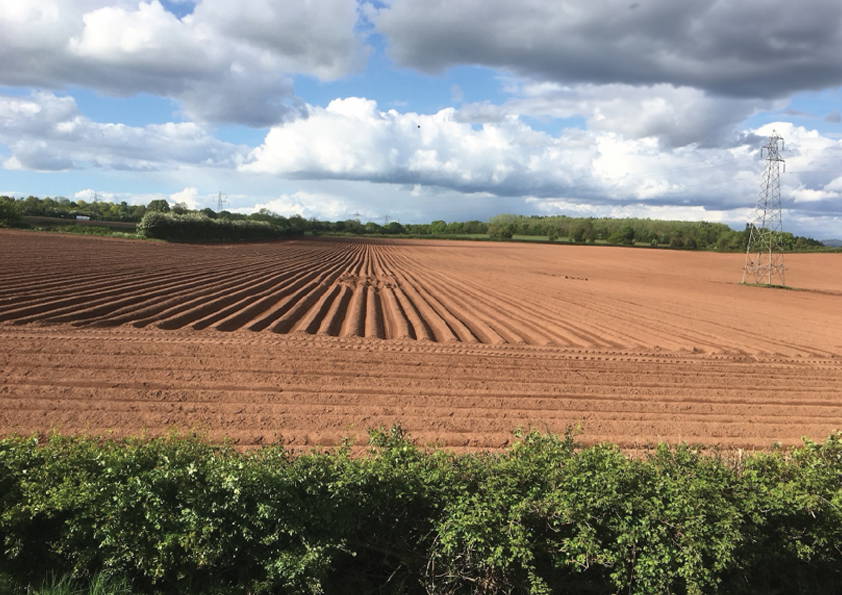
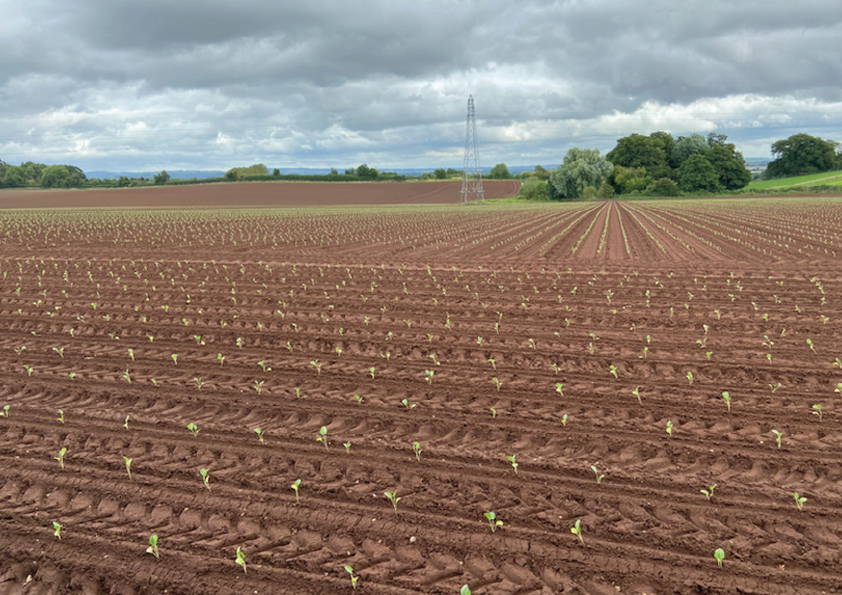
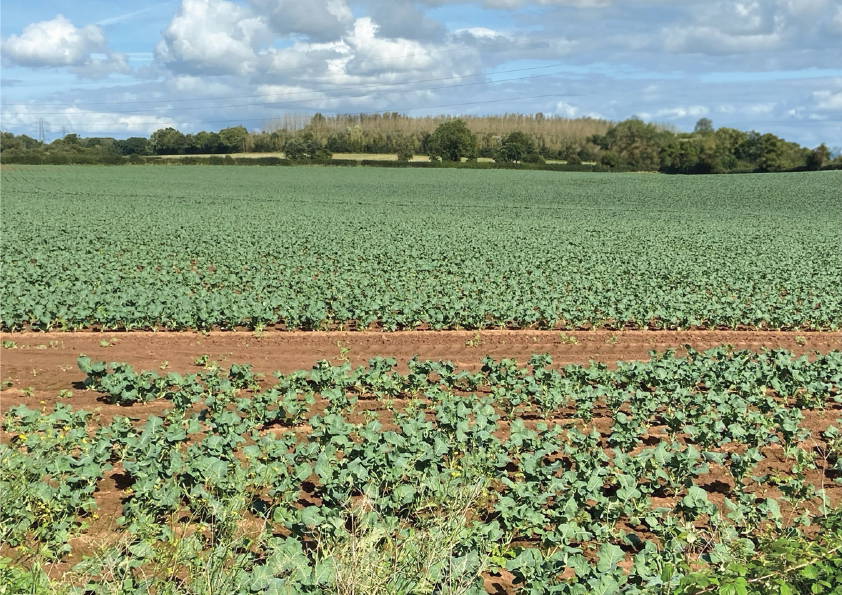
The fields proposed for this development have produced crops including potatoes, peas, cereals and vegetables. These are exactly the types of fertile soils that future generations will depend upon for domestic food production.
Removing this land from full agricultural use for decades may be described as temporary, but a 40-year change in land use spans generations.
The Local Impact
Comhampton will carry the burden.
Unlike more remote schemes, this proposal sits within a network of narrow rural lanes used every day by residents, businesses, walkers, cyclists and visitors.
Construction would inevitably bring:
- Increased heavy goods traffic;
- Road congestion;
- Temporary road disruption;
- Safety concerns on single-track roads;
- Noise and disturbance for local residents.
The impact would be felt not by distant investors, but by the people who visit, live and work here every day.
After 40 years of building solar farms on agricultural land, the UK may not have a farming industry to go back to!
Have Your Say! - This decision will shape the future of our countryside.
You can support renewable energy while opposing the use of Grade 1 farmland for industrial-scale development.
If you believe Britain's best farmland should remain available for food production, please add your voice.
This is not a choice between green energy and the environment. It is a choice about balance. We can generate renewable energy without sacrificing some of the most productive farmland in the country. Once these decisions become the norm, the consequences will be felt far beyond Comhampton. Protect our countryside. Protect our food security. Put solar in the right places.
FAQs
What is Grade 1 Land?
All the land in this country is allocated a Grade and usually marked as a colour on a map.
Grade 1 - Excellent, of which only covers between 2-3% of the country. It is often termed the Best and Most Versatile (BMV) and is the best of the best.
Grade2 – Very Good
Grade3 – Good to moderate and is subdivided into A and B
Grade4 – Poor
Grade 5 – Very Poor
Why is Grade 1 land so important?
Grade 1 land is the highest classification of agricultural land in England. It has very few physical or chemical limitations, making it exceptionally fertile and capable of producing consistently high crop yields. It is suitable for growing a wide range of crops, including potatoes, vegetables, cereals and soft fruits, and can typically produce significantly higher yields than average agricultural land.
In an increasingly uncertain world, food security has become a national priority. Protecting the UK's most productive farmland is therefore an important part of safeguarding our future ability to produce food domestically.
The land proposed for the Comhampton Solar Farm has recently produced crops including potatoes, Tenderstem broccoli, broad beans, peas and barley, demonstrating its value as productive agricultural land.
Can't the land simply be restored afterwards?
The developer has stated that the site would be returned to agricultural use at the end of the project's life. However, questions remain about how straightforward this process would be.
Large solar developments require extensive infrastructure, including access tracks, foundations, drainage systems and areas of hardstanding to support heavy construction and maintenance vehicles. The removal of this infrastructure and the restoration of Grade 1 soils could be both complex and costly.
There are also important questions that have yet to be fully answered:
- How will the restoration of the land be guaranteed?
- Who will be responsible for the cost of restoring the site?
- What safeguards are in place if ownership changes or the operating company no longer exists in 40 years' time?
- Will the land be capable of returning to its current agricultural productivity?
These are legitimate long-term considerations when deciding whether some of the UK's best farmland should be taken out of full food production for decades.
Where does the Government stand on using high-quality farmland for solar developments?
The Government has repeatedly recognised the importance of protecting the UK's best and most productive agricultural land.
During discussions on the Planning and Infrastructure Bill in March 2025, Deputy Prime Minister Angela Rayner stated that high-quality agricultural land needed for food security and national security should be protected and not unnecessarily displaced by energy developments.
More recently, Government policy and guidance have continued to emphasise the importance of safeguarding "Best and Most Versatile" (BMV) agricultural land wherever possible.
While renewable energy remains an important national priority, there is also growing recognition that food security and the protection of high-quality farmland must be carefully considered when deciding where new solar developments should be located.
What does DEFRA say about high-quality agricultural land?
In its Land Use Framework, published in March 2026, DEFRA stated that "Best and Most Versatile" (BMV) agricultural land should be safeguarded from development and long-term changes in land use, including pressures from housing, solar developments and tree planting.
This reflects a growing recognition that high-quality farmland is a finite and valuable national resource that plays an important role in food production, food security and the long-term resilience of UK agriculture.
The proposed Comhampton Solar Farm is predominantly located on Grade 1 land, which is the highest classification within the Best and Most Versatile category and represents only a very small proportion of the UK's agricultural land.
Privacy Policy